


The Equinox's Field modes are specifically designed for hunting historical sites where you'll encounter the widest range of target sizes mixed with ferrous trash. If you're targeting hammered coins and artifacts in old farmsteads or historically occupied areas, these modes will give you the edge you need.
Field Mode Overview: Built for Historical Site Hunting
Field Mode excels in open pasture, cropped fields, plowed fields, and historically occupied sites. These environments typically contain ferrous trash and coke from previous human occupation. The mode's discrimination patterns are specifically tuned to reject coke signals while maintaining sensitivity to valuable targets.
When you set Frequency to Multi, Field Mode becomes the most sensitive to the widest range of targets. You'll get more accurate target identification at maximum detection depth compared to any single frequency option on the Equinox 600 or 800.
Field 1: General Purpose Coin and Artifact Detection
When to Use Field 1
Field 1 works best for general hunting with high trash rejection. The default discrimination pattern rejects Target IDs 1 and 2 (most coke signals), and the first Tone Break is set so these IDs produce the same low tone as ferrous targets.
This mode processes a lower frequency weighted multi-frequency signal while maximizing ground balancing for soil conditions. The result? The best signal-to-noise ratio for general detecting and coin hunting in typical field conditions.
Field 1 Key Settings
- Target IDs 1-2: Rejected by default (coke discrimination)
- Frequency weighting: Lower frequencies emphasized
- Ground balancing: Optimized for soil conditions
- Best for: General coin hunting, larger artifacts
Field 2: Fine Coins and High-Density Target Areas
When Field 2 Outperforms Field 1
Field 2 shines in locations with high target and trash densities. It'll detect small hammered coins on their edge or at greater depth better than Field 1. The mode uses 50 tones for enhanced audio identification and faster Recovery Speed.
Field 2 processes a higher frequency weighted multi-frequency signal while maintaining ground balancing for soil. This makes it more sensitive to smaller, thinner targets that Field 1 might miss.
Field 2 Advantages
- Target Tone: 50 tones (vs Field 1's fewer tones)
- Recovery Speed: Faster target separation
- Frequency weighting: Higher frequencies emphasized
- Best for: Small hammered coins, thin artifacts, trashy areas
Finding Historical Site Hotspots for Field Mode Detecting
Research-Based Site Selection
The most productive approach involves finding old inhabited sites that have disappeared from view. Online research using historical texts, old maps, and local articles can reveal forgotten homesteads and settlements.
Search online for "metal detector treasure" finds to see what's being discovered in similar historical sites. You'll notice many significant finds come from well-researched locations rather than random field hunting.
Freshly Plowed Fields
Freshly plowed fields offer excellent opportunities because deep targets get churned to the surface during plowing. Always get permission first, but these sites can produce targets that were previously out of range.
Dealing with Coke Contamination
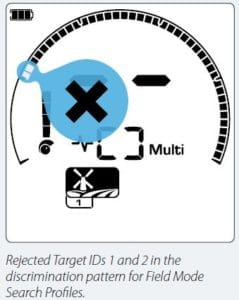
Understanding Coke Signals
Coke is the charcoal and carbon by-product of burnt coal, prevalent around historically populated areas. It typically produces Target IDs of 1 or 2, which is why both Field modes reject these IDs by default.
This discrimination does mean you might miss some small non-ferrous targets. However, Field 1 Multi-IQ will reject more coke than Field 2 even with Target IDs 1 and 2 accepted, so adjust your settings based on site conditions.
Coke vs. Valuable Targets
While rejecting IDs 1-2 eliminates most coke, experienced detectorists sometimes hunt with these IDs accepted in areas known for small gold items or very thin silver artifacts. You'll dig more trash, but you won't miss those edge-case valuable targets.
Field Mode Settings for Different Scenarios
Light Trash Conditions
In relatively clean historical sites, Field 1 with Multi-IQ provides excellent depth and target separation. The lower frequency weighting helps with larger coins and artifacts at maximum depth.
Heavy Trash and Iron
Switch to Field 2 when trash density increases. The higher frequency weighting and faster recovery speed help separate good targets from iron debris. The 50-tone audio gives you better target identification in challenging conditions.
Equinox 800 vs 600 in Field Mode
Both the Equinox 600 and 800 offer identical Field mode performance with Multi-IQ. The 800's advantage comes from additional single frequencies and Gold modes, but for historical field hunting, both models perform equally well.
Maximizing Field Mode Performance
Ground Balancing in Agricultural Fields
Agricultural fields often have varying mineralization due to fertilizer application and soil composition changes. Field mode's automatic ground balancing handles most conditions, but manual adjustment may help in heavily fertilized areas.
Coil Selection for Field Hunting
The stock 11" coil works well for most field conditions, but consider a larger coil for maximum depth in clean areas, or a smaller coil when trash density requires better target separation.
