Skip to Product Info
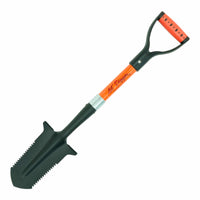
    • Lesche Sampson Pro-Series 18-inch mini shovel with T-handle and serrated edge for relic and remote-site metal detecting
    • Lesche Sampson Pro-Series 18" Mini Shovel with T-Handle and Serrated Edge
    • Lesche Sampson Pro-Series 18" Mini Shovel with T-Handle and Serrated Edge
    Sale!

    Lesche Sampson Pro-Series 18" Mini Shovel with T-Handle and Serrated Edge

    SKU: WWMFG-TH18-SER
    Sale Price $92.80 Regular Price $114.95
    Shipping calculated at checkout.

    Stock adequate! Ready to ship

    Payment & Security

    Your payment is secure. We don’t store or see your card details.

    • Amazon
    • American Express
    • Apple Pay
    • Diners Club
    • Discover
    • Google Pay
    • Mastercard
    • PayPal
    • Shop Pay
    • USDC
    • Visa

    The Lesche Sampson Pro-Series is an 18-inch mini shovel built from aircraft-quality steel with a serrated edge and T-handle, designed for relic hunters and coin shooters working remote sites where a full-size shovel is impractical but a hand digger won't cut it. Detectorists utilizing advanced metal detector technologies while hunting cellar holes, farm fields, and ghost towns need a tool that balances reach, cutting power, and portability without the bulk of a standard spade.

    Why Relic and Remote-Site Hunters Reach for the Lesche Sampson

    • Aircraft-quality steel construction resists bending and denting in rocky ground and root-heavy soil, backed by a 5-year warranty against breakage under normal use.
    • Serrated edge cuts through compacted clay, sod, and fibrous roots faster than a straight blade, reducing fatigue on multi-hour hunts in overgrown sites.
    • T-handle grip provides two-handed control for prying and levering in hard ground, giving better mechanical advantage than a ball-handle design when breaking through caliche or frozen topsoil.
    • 18-inch overall length balances digging depth with portability, fitting in a vehicle or gear bag without the unwieldy size of a full spade while still reaching targets 8-10 inches down.
    • Heat-treated edge maintains sharpness through hundreds of digs, eliminating the need for frequent field sharpening that dulls standard hardware-store shovels after a season.

    Cutting Power in Root-Heavy and Compacted Ground

    Overgrown Farm Fields and Cellar Holes

    The Sampson's serrated edge excels in overgrown sites where grass, weeds, and shallow root systems have matted the top 6 inches of soil. The teeth bite into fibrous material without the blade skating off the surface, a common frustration with smooth-edged shovels in sod. We've used the Sampson in abandoned homestead yards where decades of blackberry and wild rose have created a dense root mat; the serrated edge cuts a clean plug perimeter in half the strokes a standard blade requires. The T-handle lets you apply downward pressure with both hands, driving the blade through compacted clay layers without the handle twisting in your grip. In rocky New England cellar holes, the heat-treated edge holds up to repeated contact with fieldstone without rolling or chipping, a durability advantage over hardware-store tools that dull after a dozen hard digs.

    Ghost Town and Desert Relic Sites

    In arid climates where the soil is baked hard and mixed with gravel, the Sampson's aircraft-quality steel resists the stress fractures that crack thinner blades. We've run this shovel in Nevada ghost towns where the ground is a mix of decomposed granite and caliche; the blade's smooth finish sheds sticky clay without buildup, and the rust-resistant steel tolerates being left in the truck bed through temperature swings without surface corrosion. The 18-inch length is short enough to pack on a UTV or ATV without strapping a full-size tool to the rack, yet long enough to reach targets at the 8-10 inch depth common in old trash scatter sites. For detectorists who hunt remote locations miles from a vehicle, the Sampson's balance between cutting power and portability makes it a practical choice over heavier digging bars or lightweight hand trowels that lack the reach for deeper signals. Our team stocks a range of metal detecting shovels, diggers, and picks for different terrain types, and the Sampson consistently ranks as the go-to for mixed-use remote hunts.

    Lesche Sampson Pro-Series mini shovel with serrated edge, T-handle, and three angle views

    Specifications

    • Overall Length: 18 inches
    • Blade Dimensions: 7.5 inches long x 4 inches wide
    • Edge Style: Pre-sharpened serrated edge
    • Handle Type: T-style handle
    • Materials: Aircraft-quality steel, heat-treated edge
    • Finish: Rust-resistant coating
    • Country of Manufacture: USA
    • Warranty: 5 years against breakage under normal use

    Why Buy from Serious Detecting

    We are an authorized dealer for W.W. Manufacturing, the parent company of Lesche Tools, ensuring every Sampson shovel ships with the full 5-year manufacturer warranty. Our team has field-tested the Sampson line in relic sites across the Southwest and Northeast, and we stock the full range of Lesche digging tools for detectorists who need proven gear for remote hunts. Every order over $99 ships free within the continental U.S., and our 30-day return policy covers tools that don't meet your expectations in the field. We price-match competitor offers on identical SKUs, and our customer service team includes active detectorists who can answer questions about blade geometry, handle ergonomics, and use-case fit before you buy.

    Product Specifications
    Specification Name Specification Value
    Handle type T-Handle
    Magnets No
    Material Steel
    Shovels diggers picks type Shovels
    Service & Support

    Warranty & Product Assurance

    At Serious Detecting, we stand behind the quality of every product we offer. Warranty coverage is provided directly by the manufacturer and may vary depending on the item. We’re here to help you understand your coverage and assist with the warranty process when needed. If you ever have questions or need support navigating a warranty claim, our team is happy to guide you.

    Technical Support & Expert Guidance

    Whether you’re setting up new gear, optimizing performance, or troubleshooting an issue in the field, our knowledgeable support team is here to help. We use this equipment ourselves, so we can offer real-world tips and step-by-step assistance to get you detecting with confidence. Message us anytime and we’ll do our best to get you pointed in the right direction fast.

    Manuals, Resources & Downloads

    Access user manuals, setup guides, safety tips, and technical documentation in our online support center. These resources help you understand your equipment, learn recommended settings, and get the most out of every hunt.

    Replacement Parts & Accessories

    Keep your equipment running strong with genuine parts and accessories. We carry coils, batteries, chargers, protective gear, digging tools, and more — fully compatible with your detector and backed by manufacturer standards. Not sure what fits your model? Just ask — we’re here to help.

    Training & Tutorials

    New to detecting or upgrading to advanced equipment? Our resource library includes helpful guides, maintenance tips, how-to videos, and expert advice from experienced detectorists. From ground balancing and coil choices to target ID basics and field technique, you’ll find the knowledge you need to level up your success.

    Customer Questions & Expert Answers

    Get real answers from outdoor explorers and our product experts. Browse questions about performance, features, and setup — or ask your own to make sure this gear fits your next adventure.

    What detector brands and models pair well with the Lesche Sampson shovel?

    The Lesche Sampson shovel pairs well with any metal detector used for relic hunting, coin shooting, or cache recovery in remote sites. Detectorists running Minelab Equinox, Garrett AT series, XP Deus, or Nokta Makro models all use the Sampson when hunting farm fields and ghost towns where a hand digger lacks reach. The shovel's 18-inch length and serrated edge complement advanced detector technologies that excel at depth, allowing you to recover targets 8–10 inches down without excessive plug cutting. The T-handle design works equally well for right or left-handed diggers, and the rust-resistant finish tolerates being strapped to a gear harness or tossed in a truck bed without corroding

    Answered by Richard T. · May 2026

    What is the weight of the Lesche Sampson shovel and how does it affect portability?

    Constructed from premium aircraft-quality steel, the Sampson maximizes structural strength while eliminating the unnecessary mass found in heavy mild-steel hardware shovels. At 18 inches overall, it fits comfortably inside a large backpack, straps to an ATV rack, or slides behind a truck seat. For detectorists who hike miles into remote farm fields or desert sites, this lightweight profile enables an easy all-day carry. It provides enough physical heft to drive the blade through tough ground without handle flex, making it a premier choice among our wider selection of specialized metal detecting

    Answered by John W. · May 2026

    Can the Lesche Sampson handle frozen ground or permafrost conditions?

    The Lesche Sampson can handle moderately frozen topsoil where the frost layer is 2-3 inches deep, but it is not designed for breaking through deep permafrost or ground frozen solid below 4 inches. The heat-treated edge and aircraft-quality steel resist chipping when you strike shallow frost, and the T-handle provides the leverage needed to pry up frozen plugs once you've cut the perimeter. In late fall or early spring when the top few inches freeze overnight but thaw by midday, the Sampson works well for relic and coin recovery. For deep-winter hunts in northern climates where the ground is frozen 6-12 inches down, a digging bar or pickaxe is a better tool; the Sampson's blade geometry is optimized for cutting and prying in soil with some give, not for breaking ice-hard ground that requires impact force.

    Answered by Richard T. · May 2026

    How do I maintain the serrated edge and prevent rust on the Lesche Sampson?

    Maintain the Sampson's serrated edge by rinsing off soil and debris after each hunt, drying the blade with a rag, and applying a light coat of machine oil or silicone spray to the steel surfaces before storing. The rust-resistant finish protects against surface corrosion, but prolonged exposure to moisture or acidic soil will eventually oxidize the metal if left uncleaned. The serrated teeth stay sharp through hundreds of digs without field sharpening, but if the edge dulls from repeated contact with rocks, use a small triangular file to touch up each serration individually, following the original bevel angle. Store the shovel in a dry location rather than leaving it in a damp truck bed or garage floor where condensation accelerates rust. The heat-treated edge is harder than the blade body, so avoid using the Sampson as a pry bar against large rocks or concrete, which can crack the heat-treat zone and void the warranty.

    Answered by Dan P. · May 2026

    What is the difference between the T-handle and ball-handle Sampson models?

    The T-handle Sampson provides a secure two-handed grip that delivers superior downward pressure for breaking hard ground and prying up compacted plugs. This is ideal for clay, caliche, or root-heavy sites where maximum mechanical force is required. Conversely, the ball-handle model offers a single-hand grip that some detectorists prefer for quick, rapid digging in softer turf or sand. Both models utilize the exact same 18-inch blade length, serrated edge, aircraft-grade tubing, and 5-year warranty. Choose the T-handle if you frequently encounter changing, unpredictable backcountry soil environments. Explore our complete line of

    Answered by John W. · May 2026

    Is the Lesche Sampson suitable for gold prospecting or only metal detecting?

    The Lesche Sampson is suitable for gold prospecting in dry placer environments where you're digging test holes, sampling bench gravels, or recovering targets from shallow bedrock crevices, but it is not a replacement for a full-size shovel when moving large volumes of material for sluicing or drywashing. Prospectors use the Sampson for scouting new areas, digging out crevice pockets, and sampling overburden layers before committing to a full dig. The 18-inch length and serrated edge work well in decomposed granite and clay-bound gravels common in desert placers, and the rust-resistant finish tolerates exposure to mineralized soil without corroding. For high-volume material movement, a full-length square-point or scoop shovel is more efficient. The Sampson's niche in prospecting is portability and precision digging rather than bulk excavation, making it a practical secondary tool for detectorists who also run a gold detector in remote dry washes.

    Answered by Richard T. · May 2026

    Can I use the Lesche Sampson in saltwater beach environments?

    The Lesche Sampson can be used in dry sand and dune areas at saltwater beaches, but it is not the optimal tool for wet sand or surf-zone digging where a sand scoop is faster and more efficient. The rust-resistant steel finish tolerates occasional exposure to salt spray and humid coastal air, but prolonged immersion in saltwater or leaving the shovel buried in wet sand will accelerate corrosion despite the protective coating. Rinse the blade thoroughly with fresh water after each beach hunt and dry it completely before storing to prevent salt buildup and oxidation. For dry-sand relic hunting at old beach resorts or dune systems where targets are buried 8-12 inches deep, the Sampson's serrated edge cuts through compacted sand layers and the T-handle provides leverage for extracting deep plugs. For active surf zones and wet sand, a stainless-steel sand scoop is the better choice.

    Answered by John W. · May 2026

    How deep can I realistically dig with the 18-inch Lesche Sampson?

    The Lesche Sampson's 18-inch overall length allows you to dig plugs 8-10 inches deep in typical soil conditions, with the effective digging depth determined by blade length rather than overall tool length since the handle portion does not enter the ground. The 7.5-inch blade reaches the 8-10 inch range when you angle the shovel and use the T-handle to apply downward force, which is sufficient for most coin, jewelry, and shallow relic targets. For deeper cache recovery or targets below 12 inches, a full-length spade or digging bar is required because the Sampson's compact design prioritizes portability over maximum depth. In loose or sandy soil, you can excavate a wider hole and reach slightly deeper by removing multiple scoops, but in hard-packed clay or gravel, the 8-10 inch range is the practical limit before the handle geometry makes further penetration inefficient.

    Answered by Richard T. · May 2026

    Where is the Lesche Sampson manufactured and does that affect quality or warranty service?

    The Lesche Sampson is manufactured in the USA by W.W. Manufacturing, which has produced digging tools since the 1950s and holds the registered trademarks for Lesche and King of Spades product lines. Domestic manufacturing ensures consistent quality control, access to high-grade aircraft-quality steel, and faster warranty service compared to imported tools that require international shipping for repairs or replacements. Walter Lesche founded the company in the mid-1950s with a focus on building durable products from premium materials, and that manufacturing philosophy continues today. Each shovel is hand-crafted and heat-treated at the company's facility, and the 5-year warranty is serviced directly by W.W. Manufacturing in the United States. For detectorists who prioritize supporting domestic production and want reliable warranty support without overseas delays, the USA manufacturing is a tangible advantage over imported digging tools with shorter warranties and limited service infrastructure.

    Answered by Dan P. · May 2026

    How does the serrated edge compare to a straight blade for digging in different soil types?

    The Sampson's serrated edge cuts through fibrous roots, sod, and compacted clay faster than a straight blade by concentrating force along the teeth, which bite into material rather than skating off the surface. In root-heavy sites like overgrown homesteads or wooded areas, the serrations slice through shallow root systems without requiring the repeated chopping strokes a smooth blade demands. In hard-packed clay or caliche, the teeth create initial fracture points that make it easier to break up the soil plug. The tradeoff is slightly rougher plug edges compared to a straight blade, which some park hunters prefer for clean turf replacement. For remote relic and coin sites where plug aesthetics matter less than cutting speed and edge durability, the serrated design reduces fatigue and maintains sharpness longer than a straight edge that dulls from repeated contact with rocks and roots.

    Answered by Dan P. · May 2026

    Does the 5-year warranty cover the blade edge or only structural breakage?

    The 5-year Lesche warranty covers structural breakage of the blade, handle, and welds under normal use, but it does not cover edge wear, dulling, or damage caused by misuse such as prying against rocks, using the shovel as a hammer, or digging in conditions beyond the tool's design limits. Normal use includes digging soil, cutting roots, and prying up plugs in typical relic, coin, and prospecting sites. If the blade cracks, the handle breaks, or a weld fails during standard digging operations, Lesche will repair or replace the shovel. Edge dulling from repeated use is considered normal wear and is not a warranty claim, but the heat-treated edge is designed to hold sharpness far longer than unhardened steel. Rust or corrosion from lack of maintenance is also excluded. To file a warranty claim, contact the retailer where you purchased the shovel or reach out to W.W. Manufacturing directly with proof of purchase and photos of the damage.

    Answered by Dan P. · May 2026

    Customer Reviews & Field Feedback

    See what real detectorists and prospectors are saying. Read authentic experiences from the field, discover what users love most, and learn how this product performs in real-world conditions. Share your own review to help fellow explorers choose with confidence.

    Recently Viewed Gear

    Last products you explored