How to Choose a Gold Detector
Choosing a gold detector comes down to one question: what kind of gold, in what kind of ground? The right metal detector for gold depends on both. Three technologies divide the field, and each is built for a different job.
High-frequency VLF machines like the Fisher Gold Bug Pro (19 kHz) and Minelab Gold Monster 1000 (45 kHz) run far higher frequencies than a coin detector because higher frequency means more sensitivity to small, low-conductivity gold. They're the most affordable way into prospecting and excel at fine surface gold and jewelry, though heavy mineralization can challenge them.
Simultaneous multi-frequency: Minelab's Multi-Au, on the Gold Monster 2000, runs a stack of high frequencies (12 to 76 kHz) alongside a soil-handling stage, combining VLF-style sensitivity to tiny gold with much better handling of difficult ground.
Pulse induction (PI) machines such as the AlgoForce E1500 Plus and Minelab GPX 6000 all but ignore the severe mineralization and hot rocks that overwhelm VLF, reaching deeper and hearing larger and deeper gold in the harshest goldfields. At the very top, Minelab's ZVT and next-generation GeoZVT platforms (the GPZ 7000 and GPZ 8000) deliver the greatest depth of any gold-detecting technology made. As a rule: high-frequency VLF for affordable, small-gold sensitivity; pulse induction and ZVT for depth and brutal ground.
Gold Detectors by Experience & Budget
If you're new to prospecting, a high-frequency VLF like the Fisher Gold Bug Pro or the turn-on-and-go, fully automatic Minelab Gold Monster 1000 gets you finding gold without a steep learning curve. New to the goldfields entirely? Start with our guide to the best gold detectors. Stepping up, the Multi-Au Minelab Gold Monster 2000 adds multi-frequency performance and far better ground handling for mixed conditions. For serious and professional prospectors, pulse-induction and ZVT flagships, the lightweight AlgoForce E1500 Plus, the fast and simple Minelab GPX 6000, and the deepest-reaching Minelab GPZ 7000 and GPZ 8000, are built to chase gold others can't reach. Browse these by price across our $1000-$3000, $3000-$5000, and over-$5000 collections.
What Affects Gold-Detecting Depth & Sensitivity
If you’re wondering whether a metal detector can really detect gold, it can, but how well comes down to three factors. Frequency controls sensitivity to target size: higher frequencies hit small gold hardest, while lower frequencies and pulse-induction (PI) reach deeper on larger nuggets. Ground mineralization is the gold hunter’s biggest enemy, the iron-rich, “hot” soil where gold tends to hide is exactly what masks faint signals, which is why PI and ZVT machines earn their premium in real goldfields. Coil choice is the third lever: a small coil maximizes sensitivity to tiny gold and works tight, trashy patches, while a larger coil covers more ground and reaches deeper targets. Match all three to your site and a good gold detector becomes a genuinely productive one. Visit our blog and our guide on how to detect gold to learn more.
Complete Your Prospecting Kit
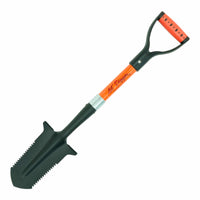
A gold machine works best with the right support gear. A gold-capable pinpointer speeds recovery on tiny targets, a rugged pick and a scoop handle hardpan and creek banks, quality headphones reveal the faintest threshold changes, and an extra search coil lets you tune sensitivity and depth to the patch. Round it out with prospecting equipment like pans, sluices, and classifiers, and see all metal detector accessories.
Before your first trip, it is also worth reading our guide to common gold detecting mistakes.
Why Buy Your Gold Detector from Serious Detecting
Gold detecting rewards buying from people who actually prospect. Serious Detecting is an authorized US dealer for Minelab, Fisher, Nokta, AlgoForce, and more, so every gold detector ships new with the full manufacturer warranty and real prospecting support behind it, never gray-market gear. Orders over $99 ship free within the lower 48, local pickup is available out of Michigan, and our staff hunts gold with these exact machines. Tell us where you prospect and what you're chasing, and we'll match you to the right gold detector, and the coils and accessories to get the most from it.