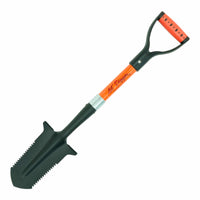
Dig Standing Up
The long straight handle exists to keep you vertical. In wet sand and the surf line you plant the basket behind the target, drive it with a foot or a firm push, rock back on the handle, and lift, all without kneeling into the next wave. In dry sand it saves your back the hundred small bends that end a session early. The retrieve becomes a rhythm: scoop, shake at waist height, listen for the target rattling in the basket. Once you have dug standing up for an afternoon, a hand trowel on the beach feels like punishment.
The Basket Does the Sorting
The handle gets you to the sand; the basket sorts it. Most serious scoops hang a stainless steel basket on the shaft, punched with round or hex holes sized to pass sand quickly while holding on to coins, rings, and chains. Wet, packed sand drains slower than dry, so a few firm shakes at the waterline or underwater clear the load fast. Handle length is the personal variable: taller hunters and surf waders want the longest shafts, while dry-sand hunters can run shorter and lighter.
When Another Handle Style Fits Better
If the scoop has to fly in a suitcase, the short and collapsible shafts on the travel scoops page solve that. If dragging loaded baskets through wet packed sand wears on your wrists, the bent shafts under curved handles change the pulling angle. Everything together lives in all sand scoops and diving tools. On the machine side, the beach metal detectors page covers detectors built for sand and salt, and a waterproof pinpointer picks the target out of a full basket in seconds.