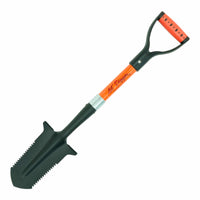
Sand Scoops for Metal Detecting: Get the Recovery Right
The most common mistake beach detectorists make is using a garden trowel or improvised tool for sand recovery. In wet, packed sand you can’t recover a target efficiently without a proper sand scoop. The drainage holes are what make it work. A scoop with the right hole pattern lets you lift a load of wet sand, give it a shake, and reduce it to a small handful holding your target in seconds. The right scoop turns a two-minute scramble against the tide into a clean 10-second retrieve.
Stainless Steel vs Aluminum vs Titanium
Stainless steel is the top choice for serious saltwater beach work, strong, durable, and corrosion-resistant season after season. Aluminum is lighter and easier to swing all day, ideal for dry sand and lighter use, though less rugged in surf. Titanium is the premium option: nearly as strong as steel at a fraction of the weight and effectively immune to saltwater corrosion, the pick if you hunt the surf often and want the lightest tool that lasts a lifetime.
Long Handle vs Short Handle
A long-handle scoop lets you dig and sift from a standing position, essential for surf and shallow-water hunting where bending over a wave means a soaked back. A short-handle (hand) scoop is faster and more precise for dry sand and detailed digging on your knees. Many serious beach hunters carry both, paired with a waterproof pinpointer to find the target in the scoop fast.
Drainage Hole Pattern Matters
Hole size and layout decide how fast sand clears and how small a target the scoop will hold. Larger holes (around 10 mm) drain wet sand fastest and suit beach and surf work; smaller holes hold tiny targets like thin gold chains but clear sand slower. Hexagonal patterns add structural strength and let sand flow from multiple angles, which is why they dominate premium scoops.
Pinpointers & Tools for Water Recovery
Recovery is a system, not a single tool. A waterproof pinpointer turns a scoop full of sand into a found target in seconds, and a quality digging tool handles the ground a scoop can’t. Gearing up for the water? See our underwater & waterproof metal detectors and dedicated beach metal detectors.
Sand Scoop FAQs
What is the best sand scoop for metal detecting?
For saltwater beach and surf, a stainless steel or titanium long-handle scoop with ~10 mm hexagonal holes is the standard, brands like RTG, CKG, CooB, and Quest. For dry sand and lighter use, an aluminum hand scoop is plenty. The best one comes down to where you hunt and how much weight you want to carry.
What size drainage holes should a sand scoop have?
Around 8–10 mm suits most beach hunting, fast sand clearance while still holding coins and rings. Drop to 6–7 mm if you specifically chase thin gold chains and small jewelry, and accept slightly slower sifting.
Do I need a long-handle scoop for the beach?
If you hunt wet sand, the surf line, or shallow water, yes, a long handle lets you dig and sift standing up instead of bending into the waves. For dry-sand and detailed digging, a short-handle scoop is faster.
Stainless steel or aluminum, which should I buy?
Stainless steel (or titanium) for regular saltwater use and durability; aluminum if you want the lightest tool for dry sand and occasional hunts. Saltwater is hard on aluminum over time.
Why Buy Your Sand Scoop from Serious Detecting
Most scoop sellers carry one brand. We carry them all. Serious Detecting stocks RTG, CKG, CooB, Quest, Garrett, Dune Scoops, Sito, Motley, and T-Rex in stainless steel, titanium, and aluminum, with long- and short-handle options for every kind of water and sand. Match the exact scoop to your soil, your back, and your budget in one place, backed by free shipping over $99 out of Michigan and a team that hunts the beach themselves. Tell us where you hunt and we’ll point you to the scoop that’ll still be digging in ten years.