Metal Detector Search Coil Configurations

Metal Detector Search Coil Configurations
The three most common types of coil windings are Concentric, Double-D (DD), and Monoloop. The difference between these coil types is the pattern the wire is wound within the coil.

Concentric coil

Concentric coil diagram with outer transmit and inner receive windings and cone-shaped search pattern

A Concentric coil has an inner circle and an outer circle wire winding. Its search pattern is cone shaped and can be useful for accurately pinpointing the target. Concentric coils tend to be noisier in highly mineralised ground and require more overlap of sweep for thorough ground coverage.


Double-D (DD) Coil
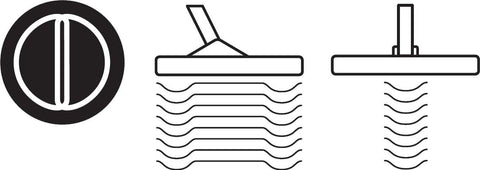
Diagram of a Double-D search coil showing top view with two D windings and side views with wide, flat detection field lines

A Double-D coil has two overlapping wire windings in the shape of two D’s (one reversed). The characteristics of a Double-D coil are stability (especially in heavily mineralised ground), good depth, sensitivity and a very thorough search pattern. When used with a GPX detector Double-D coils (as opposed to monoloop coils) are able to discriminate between ferrous and non-ferrous targets (when Iron Reject is activated). They are also more stable when used on wet salt beach sand and in electrically noisy environments.


Monoloop coil

Diagram of a monoloop search coil from top and side views, with a cone-shaped detection field beneath the coil

Monoloop coils are a special style of coil for Pulse Induction (PI) technology detectors (SD & GPX Series). These coils have one winding of wire around the circumference of the coil, which is used to both transmit and receive. The signal pattern of the Monoloop coil is cone shaped, requiring more overlapping. In extremely heavily mineralised grounds they can be more difficult to ground balance, however they tend to provide slightly better depth than the Double-D coils.
How Do Metal Detectors Work? The Science Behind...
Metal Detector Coil Shapes: Comparing Round and...

Have a question about this post?

Ask our detecting specialists. We answer most questions within one business day, and publish the useful ones here so other detectorists benefit too.

0 / 1200

Your question and our answer will be published on this page, shown with your first name.

Protected by reCAPTCHA. We only use your email to send you the answer.

Recently Viewed Gear

Items for detecting & prospecting you checked out last